
Have you been to the moon with me this week, along with millions of other humans? Especially if you’re watching the real-time camera feeds, it feels like a collective, shared journey. Astronaut Christina Koch seemed to know this when the space capsule, Orion, circled out from “behind” the moon and regained Earth contact. Her first words were poetry—“We will always choose Earth. We will always choose each other.”
We are all choosing our words and stories about this moon journey. Mainly, it’s a story about Why. Why are we doing this now? Why, when we have so much debt, poverty, conflict, and so on. These are important questions that deserve our wandering attention. While we can include them in the Why of this story, we can also transcend them. Hello, Integral.
This is a working premise that anything can be understood with an evolutionary lens. Why we’re motivated to explore the moon offers a perfect example. In the Sixties it was a race to be first, an ethnocentric incentive to have the best science, government, space program, etc. We were also leaning into more evolved and worldcentric reasons—to advance science, engineering, and technology. To inhabit the spirit of adventure, exploration, and visionary leadership. To benefit the world with real outcomes from these advances. Medical imaging, GPS, disaster response, cordless vacuums, anyone? The International Space Station is an ongoing, worldcentric success.
Your story about why we go to space can be explained by which perspective you choose, or your center of gravity—ooo, space pun.

Many of our leaders and innovators are still telling the ethnocentric story that we need to be the best. This keeps us separate and limited. Who or whatever is outside the tribe is suspicious, less good or smart. It preempts endless possibilities of collaboration. You know what has been good and smart about this moon trip? Having a Canadian astronaut on the Orion. Christina Koch with her engineering smarts. Victor Glover, a Black man, providing eloquent descriptions and piloting them around for 10 days.
This moon mission has been healing some wounds. On the day Orion went around the moon, the NASA real-time video-feed had a chat thread. All day, it held an endless stream of positive emojis, excited chatter, and rows and rows of flags from all over the world. This doesn’t even include all the people watching other feeds or TV news and cable. For a few hours, a whole lot of us around the globe were together—excited, curious, agreeing.

Remember that Why are we doing this when we have so many problems? What can help solve these things is being excited, curious, and agreeing. All the better if we include science, engineering, and technology. Remember too that behind those four astronauts are tens of thousands of people and years of research, building, and testing to get them into space. Maybe it takes having an adventure to energize the hard work we need to solve those problems.
This is my invitation. To lean into what’s possible, even when we don’t fully understand it. We have to try to include everyone and transcend the limits and scarcity of tribal thinking. It takes courage, especially trusting the people, ideas, and systems outside our ethno-sphere. Generally I’ve found that trust over suspicion is a lot more useful, fun, and healthy. We continue to care about what’s inside our ethnocentric worlds—it’s a Yes, and….
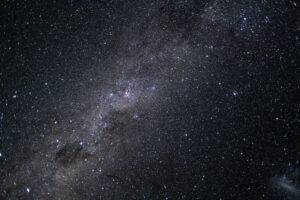
What I really loved about this moon mission has been that poetry. The surprised and unexpected expressions from those astronauts. The respectful, bright responses and directions from the command center. Mostly women—how does that somehow make a difference? The gorgeous photos. The camera feed from inside that little spacecraft—Christina’s hair, Victor’s shammy bath, Jeremy Hanson’s height stretched out horizontally, Reid Wiseman naming a moon crater after his recently deceased wife.
They all leaned into something beyond themselves. So can we. And that is why we have a moon mission.
Reid Wiseman, Artemis Mission Commander: “It’s just everything from the training, but in three dimensions and absolutely unbelievable.”
Jacki Mahaffey, NASA mission control: “Copy, moon joy.”